03 Sep
Why Do Dogs Shed So Much? Causes and How to Control It
You know your dog has claimed the house when you start finding dog hair everywhere, on the couch, stuck to your clothes, and somehow even on the car seat. It’s one of those little things that simply comes with having a dog. But while some shedding is completely normal, noticing a lot more hair than usual can make you wonder if something is wrong.
The good news is that dog shedding is a natural part of a dog’s life and, in most cases, isn’t something to worry about. But how much is too much? In this blog, we’ll look at why dogs shed, how to tell normal shedding from excessive shedding, and simple ways to manage dog hair at home.
Normal vs. Excessive Dog Shedding
Normal shedding is a natural part of having a dog. All dogs lose old or damaged hair to make room for new, healthy fur. Some dogs shed a little throughout the year, while others shed more during seasonal changes, especially in spring and autumn.
Excessive shedding is different. It means your dog is losing noticeably more hair than usual, especially if the hair loss comes with bald patches, dry or flaky skin, redness, or frequent scratching. These signs may point to an underlying skin or health problem and should not be ignored.
The key difference is simple: normal shedding is a regular part of your dog’s coat cycle, while excessive shedding is often sudden, unusually heavy, or accompanied by other skin changes.
Common Causes of Dog Shedding
Shedding is a normal part of having a dog, but some things can make your dog lose more hair than usual. Here are some common reasons:
- Seasonal changes: Many dogs shed more when the seasons change. Their coat grows thicker during colder months and sheds as the weather gets warmer. Some dogs may also shed more before winter as they get rid of their lighter summer coat.
- Breed and coat type: Not all dogs shed the same amount. Breeds like Labradors, Golden Retrievers, and Huskies naturally shed quite a bit, while some breeds have very little shedding. Your dog’s breed and coat type play a big role in how much hair you see around the house.
- Poor nutrition: A healthy coat starts with a healthy diet. If your dog is not getting enough protein, healthy fats, vitamins, and other essential nutrients, their coat can become dry, weak, or dull. This can lead to more shedding than usual.
- Allergies: Allergies can make your dog’s skin itchy and irritated. Your dog may scratch, lick, or bite the skin more often, which can lead to hair loss. Allergies can be caused by certain foods, pollen, dust, or other things in the environment.
- Parasites: Fleas, ticks, and mites can irritate your dog’s skin and make them scratch more than usual. Constant scratching can damage the skin and pull-out hair, leading to extra shedding or bald patches.
- Hormonal issues: Hormonal problems, including thyroid disorders, can affect your dog’s skin and coat. You may notice changes such as thinning hair, dry skin, or increased shedding. If these changes continue, it’s best to speak to your vet.
- Stress: Just like people, dogs can react to stress in different ways. A change in routine, moving to a new home, pet travel, or even a stressful visit to the vet can sometimes trigger temporary extra shedding.
- Wrong grooming products: Your dog’s skin is different from yours, so human shampoos or harsh grooming products can dry it out and cause irritation. Using a mild, dog-friendly shampoo and the right grooming products can help keep their skin and coat healthy.
Which Dog Breeds Shed the Most?
Coat type plays a big role in how much hair you will find around your home. Here is a quick comparison:
| Shedding Level | Breeds |
| Heavy shedders | Labrador Retriever, German Shepherd, Golden Retriever , Siberian Husky, Chow Chow, Akita |
| Lower shedders | Poodle 22, Shih Tzu, Bichon Frise |
Even low-shedding breeds need regular grooming. And short-haired dogs can shed just as much as long-haired ones, it is just less noticeable because the hair is shorter.
How to Control Dog Shedding
You cannot stop shedding completely, but you can manage it well with the right routine.
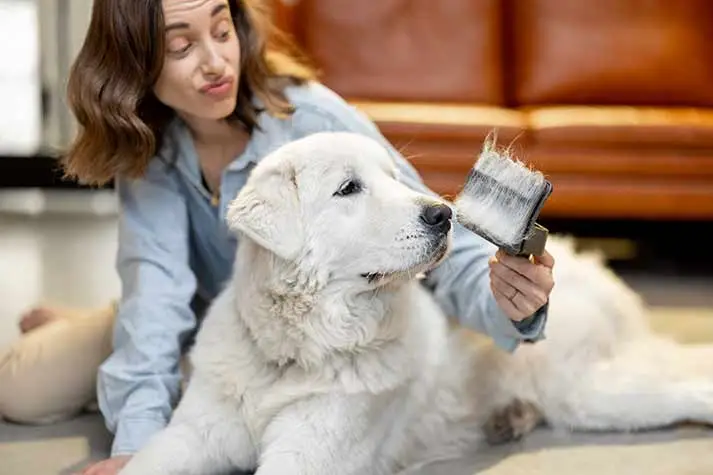
- Brush your dog regularly. Brushing removes loose hair before it ends up on your floor. Use a slicker brush for dogs with thick or double coats, and a bristle brush for short-haired dogs. A few minutes of brushing, a few times a week, makes a real difference.
- Feed a balanced diet. Good nutrition is one of the biggest factors in coat health. Look for dog food with enough protein, omega fatty acids, and essential vitamins. If your dog's food is low quality, upgrading it is often the single best dog shedding remedy.
- Bathe with the right shampoo. Regular baths with a gentle, dog-specific shampoo help remove dead hair. Avoid human shampoo, as it is too harsh for a dog's skin. Do not over-bathe either, since this can strip natural oils and cause more shedding.
- Keep your dog hydrated. Dehydration can lead to dry, flaky skin, which increases hair loss. Make sure fresh water is always available, especially in hot weather.
- Add coat supplements if needed. Fish oil or omega-3 and omega-6 supplements can support skin and coat health. Always check with your vet before starting any new supplement.
- Manage stress. A calm routine, regular exercise, and a stable environment can reduce stress-related shedding.
When to See a Vet About Shedding
Most shedding is manageable at home, but talk to a vet if you notice:
- Bald patches or thinning fur
- Red, flaky, or irritated skin
- Hair coming out in clumps
- Constant scratching or licking
- Weight loss, low energy, or increased thirst
- Shedding that is much heavier than your dog's normal patternq
These signs can point to allergies, parasites, infections, or hormonal issues that need proper treatment.
Conclusion
Dog shedding is a normal part of pet parenting, and most of it can be managed with the right brushing routine, diet, and grooming habits. But if your dog's shedding feels excessive or comes with other symptoms, do not ignore it, a quick vet check can catch the real cause early and keep your dog's coat healthy and shiny.
FREQUENTLY ASKED QUESTIONS &
Why is my dog shedding so much all of a sudden?
Sudden dog shedding is often linked to seasonal changes, stress, or a diet change. If it comes with itching, redness, or bald spots, it could be an allergy or skin issue, so a vet visit is a good idea.
What months do dogs shed the most?
Dogs, especially double-coated breeds, shed the most during spring and autumn. This seasonal dog shedding happens as their coat switches between summer and winter fur.
How can I stop my dog from shedding so much?
You cannot stop shedding completely, but regular brushing, a good diet, proper bathing, and hydration can control dog shedding significantly and keep loose hair to a minimum.
Is it normal for a dog to shed every day?
Yes, light daily shedding is normal for most dogs. It becomes a concern only when shedding is heavy, sudden, or paired with skin problems.
Does bathing a dog reduce shedding?
Regular bathing with a dog-safe, de-shedding shampoo helps remove loose hair and can reduce shedding. However, bathing too often can dry out the skin and make shedding worse.




AUTHOR’S BIO
Carry My Pet
Passionate pet enthusiasts and globetrotters, dedicated to easing furry friends' journeys worldwide. Penning tales of compassion at CarryMyPet, where every relocation is a tail-wagging adventure.